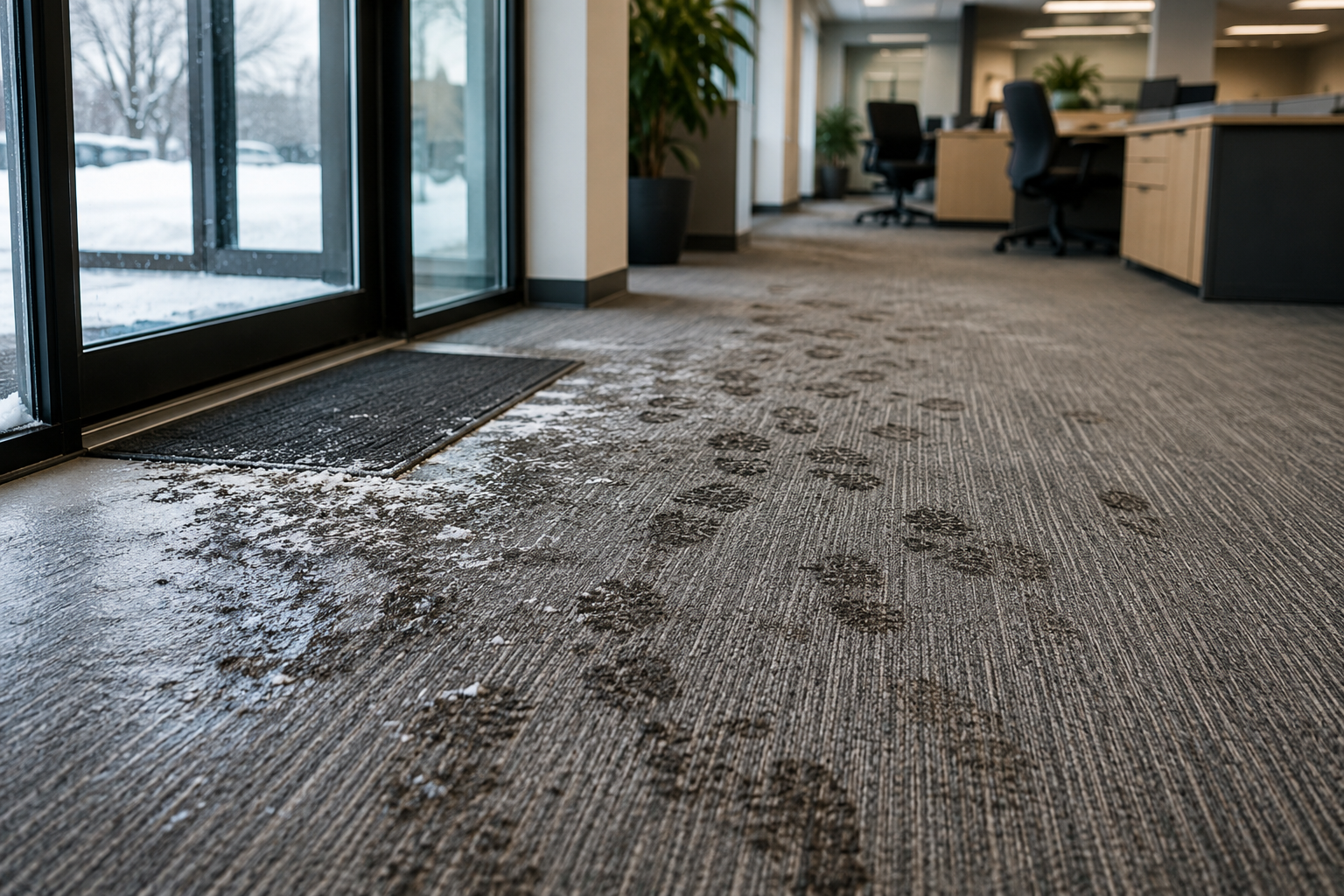
Winter in Edmonton can be tough on commercial office carpets. Snow, road salt, slush, mud, and moisture are tracked inside every day by employees, customers, and visitors. Even an office that looks clean in the morning can develop dirty entryways, visible stains, and unpleasant carpet odours by the afternoon.
For Edmonton businesses, maintaining clean carpets during winter is about more than appearance. Regular carpet maintenance helps preserve flooring, maintain a professional workplace, and prevent dirt from spreading throughout the building.
Understanding why office carpets get dirty so quickly in winter can help business owners and facility managers choose the right cleaning routine and protect their investment throughout Alberta’s cold season.
Why Do Office Carpets Get So Dirty in Edmonton During Winter?
Office carpets collect more than ordinary dust during winter. They act as a collection point for outdoor contaminants brought inside through entrances, hallways, and high-traffic work areas.
Here are six common reasons commercial carpets become dirty so quickly during Edmonton winters.
1. Snow and Slush Bring Moisture Indoors
Edmonton’s winter weather often means snow-covered sidewalks, melting snow, and slushy parking lots. Each person entering a commercial building can carry moisture on their footwear.
When snow melts into carpet fibres, it can leave damp patches and contribute to musty odours if the carpet does not dry properly. Repeated moisture exposure can also make dirt stick to carpet fibres more easily.
How to prevent it: Install commercial-grade entrance mats at exterior doors and continue matting through vestibules and reception areas. Choose mats designed to absorb moisture and capture dirt, and clean or replace them regularly.
2. Road Salt Leaves White Stains and Residue
Road salt and de-icing products are widely used to improve winter traction on Edmonton roads, sidewalks, and parking lots. These materials can be carried into offices on shoes and boots.
As moisture evaporates, salt residue may remain visible on carpet fibres as white marks or rings. Simply vacuuming the carpet may not remove these deposits because salt residue can require appropriate moisture-based cleaning.
How to prevent it: Address salt marks promptly using a carpet-safe cleaning method recommended for the flooring. Avoid applying excessive water or unapproved chemicals, which may spread the residue or damage the carpet. For widespread salt staining, professional carpet cleaning can help remove embedded deposits.
3. Dirt and Grit Wear Down Carpet Fibres
Small particles of sand, grit, and soil often accompany snow and road salt indoors. These particles settle deep into carpet fibres, especially around entrances, corridors, elevators, and reception desks.
As people walk across the carpet, the particles rub against the fibres. Over time, this repeated friction can contribute to a worn or flattened appearance.
How to prevent it: Vacuum high-traffic areas more frequently during winter. Use commercial vacuum equipment suited to the carpet type, and pay special attention to entrance routes, corridors, and shared spaces.
4. Increased Indoor Traffic Spreads Dirt
Winter weather can change how people move through a commercial building. Employees and visitors may gather around entrances, use the same corridors, and spend more time in shared indoor spaces.
This concentrated foot traffic causes dirt to build up faster in certain areas than in rooms used less frequently. A cleaning schedule that works during summer may not be sufficient during the winter months.
How to prevent it: Review your office cleaning schedule before winter begins. Reception areas, entrances, meeting rooms, and main walkways may need more frequent vacuuming and spot cleaning than private offices or low-traffic rooms.
5. Wet Carpets Can Develop Unpleasant Odours
Moisture trapped in carpet fibres or the underlying padding can create conditions that contribute to musty smells. Spills, melting snow, and damp footwear can all add to the problem.
Odours should not simply be covered with air fresheners. The source of the moisture needs to be identified, and the affected carpet should be cleaned and dried appropriately.
How to prevent it: Remove excess moisture quickly, clean wet areas using suitable equipment, and ensure carpets dry completely. If an area remains damp or develops a persistent odour, arrange a professional assessment to determine whether deeper cleaning or additional drying is needed.
6. Delayed Cleaning Allows Stains to Set In
Winter carpet stains often become more difficult to manage when they are left untreated. Salt deposits, muddy footprints, and other tracked-in materials can accumulate over several days.
Waiting until the end of the season may allow stains to become more noticeable and require more intensive cleaning.
How to prevent it: Establish a routine for identifying and treating stains as they appear. Include spot checks in daily janitorial tasks and schedule professional carpet cleaning when routine maintenance is no longer enough.
How to Protect Office Carpets During an Edmonton Winter
A consistent winter carpet maintenance plan can reduce dirt accumulation, help preserve carpet fibres, and keep commercial spaces looking professional.
Use Entrance Mats Strategically
Entrance mats are one of the most effective first lines of defence against winter dirt. Place them where employees, customers, and visitors enter the building, and use additional mats in vestibules where space allows.
For the best results:
- Choose mats suitable for heavy commercial foot traffic.
- Use absorbent mats to capture moisture and textured mats to remove dirt.
- Extend the matting area where possible so visitors have enough space to wipe their footwear.
- Vacuum mats frequently and replace or clean saturated mats promptly.
Increase Vacuuming in Busy Areas
Winter usually calls for a more targeted vacuuming schedule. High-traffic areas can require daily attention, while lower-traffic spaces may need less frequent service depending on their condition and use.
Focus on entrances, reception areas, elevators, hallways, meeting rooms, and frequently used workstations. Consistent vacuuming helps remove dry soil before it becomes embedded in the carpet.
Clean Salt Stains Using Appropriate Methods
Road salt marks should be treated with care. Using the wrong product or too much water can leave additional residue, spread the stain, or affect carpet backing and dyes.
Follow the carpet manufacturer’s care instructions and test any cleaning product in an inconspicuous area first. For extensive salt deposits or recurring white stains, professional carpet cleaning is often the more appropriate solution.
Schedule Professional Commercial Carpet Cleaning
Routine vacuuming removes loose dirt, but it cannot always remove embedded soil, accumulated residue, or stubborn winter stains.
Professional commercial carpet cleaning can help address these issues using methods selected for the carpet material, condition, and level of soiling. Depending on the building, this service may be most useful before winter, during the season when necessary, and again in spring.
A professional cleaner can also recommend a maintenance frequency based on foot traffic and the condition of your office carpets.
Respond Quickly to Spills and Wet Areas
A fast response can help prevent minor issues from becoming larger cleaning problems.
When a wet area appears, remove excess moisture using an appropriate method, avoid aggressive scrubbing, and follow the carpet manufacturer’s cleaning recommendations. Large wet areas or carpets that remain damp may require professional drying or further inspection.
Maintain a Consistent Commercial Cleaning Schedule
Carpet care works best when it is part of a wider office cleaning plan. Regular attention to entrances, floors, washrooms, shared spaces, and other high-use areas helps maintain a cleaner and more welcoming workplace.
Businesses with heavy foot traffic may benefit from a customized janitorial schedule that includes daily floor maintenance, regular carpet inspections, and periodic deep cleaning.
How Often Should Edmonton Offices Have Their Carpets Professionally Cleaned?
There is no single carpet cleaning schedule that suits every commercial building. The right frequency depends on foot traffic, carpet type, the number of employees and visitors, entrance conditions, and how effectively routine cleaning removes soil.
Consider the following general starting points:
- Busy entrances and reception areas: Inspect frequently, vacuum daily where needed, and arrange targeted deep cleaning based on visible buildup.
- High-traffic corridors and shared spaces: Use frequent vacuuming and periodic professional cleaning, adjusting the schedule during the winter season.
- Standard office work areas: Maintain regular vacuuming and schedule deeper cleaning according to usage and carpet condition.
- Low-traffic offices and meeting rooms: Use a maintenance schedule suited to actual foot traffic, with additional cleaning when spills or visible soil occur.
These are general guidelines rather than fixed industry requirements. A professional assessment can help determine the most practical schedule for your building.
Why Winter Carpet Maintenance Matters for Edmonton Businesses
Clean carpets contribute to a professional first impression, particularly in reception areas, customer-facing offices, and shared commercial spaces. They also help businesses manage routine wear and avoid allowing dirt and residue to accumulate unchecked.
A proactive maintenance plan can help:
- Maintain a clean, professional appearance for employees and visitors.
- Reduce the buildup of road salt, grit, and tracked-in soil.
- Help preserve carpet fibres through regular soil removal.
- Address stains before they become more difficult to remove.
- Identify moisture problems before they cause more extensive damage.
- Keep commercial cleaning tasks organized and consistent throughout winter.
For property managers responsible for larger buildings, a planned carpet maintenance program can also make cleaning requirements easier to monitor across multiple rooms and common areas.
Professional Office Carpet Cleaning in Edmonton
Keeping office carpets clean during an Edmonton winter requires more than occasional vacuuming. Snow, road salt, moisture, and heavy foot traffic can quickly affect the appearance and condition of commercial flooring.
Red Door Cleaning provides commercial cleaning services for businesses and facilities. A tailored cleaning plan can help your workplace address seasonal dirt, maintain high-traffic areas, and determine when professional carpet cleaning is needed.
Whether you manage a professional office, a multi-tenant building, or another commercial facility, consistent winter maintenance can help keep your carpets looking their best throughout the season.
Looking for commercial cleaning support in Edmonton? Contact Red Door Cleaning to discuss your facility’s cleaning requirements and arrange a suitable service plan.
Frequently Asked Questions
Why do office carpets get dirty faster in winter?
Office carpets get dirty faster in winter because footwear brings in snow, slush, road salt, sand, grit, and moisture. These materials accumulate in entrances and high-traffic areas, making regular vacuuming and timely stain treatment especially important.
How do you remove road salt stains from commercial carpets?
Road salt stains should be treated using a carpet-safe method appropriate for the carpet material. Follow the manufacturer’s care instructions, avoid excessive water, and seek professional carpet cleaning when residue is widespread or persistent.
How can Edmonton businesses prevent winter carpet stains?
Businesses can reduce winter carpet stains by using commercial entrance mats, vacuuming busy areas frequently, treating spills promptly, and maintaining a regular commercial carpet cleaning schedule.
How often should office carpets be cleaned in winter?
The ideal frequency depends on foot traffic, carpet condition, and the amount of salt and dirt entering the building. Busy entrances may require daily vacuuming and more frequent spot treatment, while deeper professional cleaning should be scheduled according to the level of buildup.
Is professional carpet cleaning necessary if an office is vacuumed daily?
Yes, it may still be beneficial. Vacuuming removes loose soil, but embedded dirt, salt residue, and stubborn stains may require a suitable professional cleaning method. The need and frequency depend on the carpet’s condition and daily use.
What is the best way to protect commercial carpets from road salt?
Use well-maintained entrance mats, remove tracked-in soil regularly, address salt stains promptly, and arrange professional cleaning when residue builds up. Preventing dirt from spreading beyond the entrance can also reduce maintenance requirements throughout the building.
When should businesses schedule winter carpet cleaning?
Businesses should inspect their carpets before winter, monitor high-traffic areas throughout the season, and arrange professional cleaning when visible soil, salt marks, or persistent odours develop. A further cleaning after winter can help address accumulated seasonal residue.