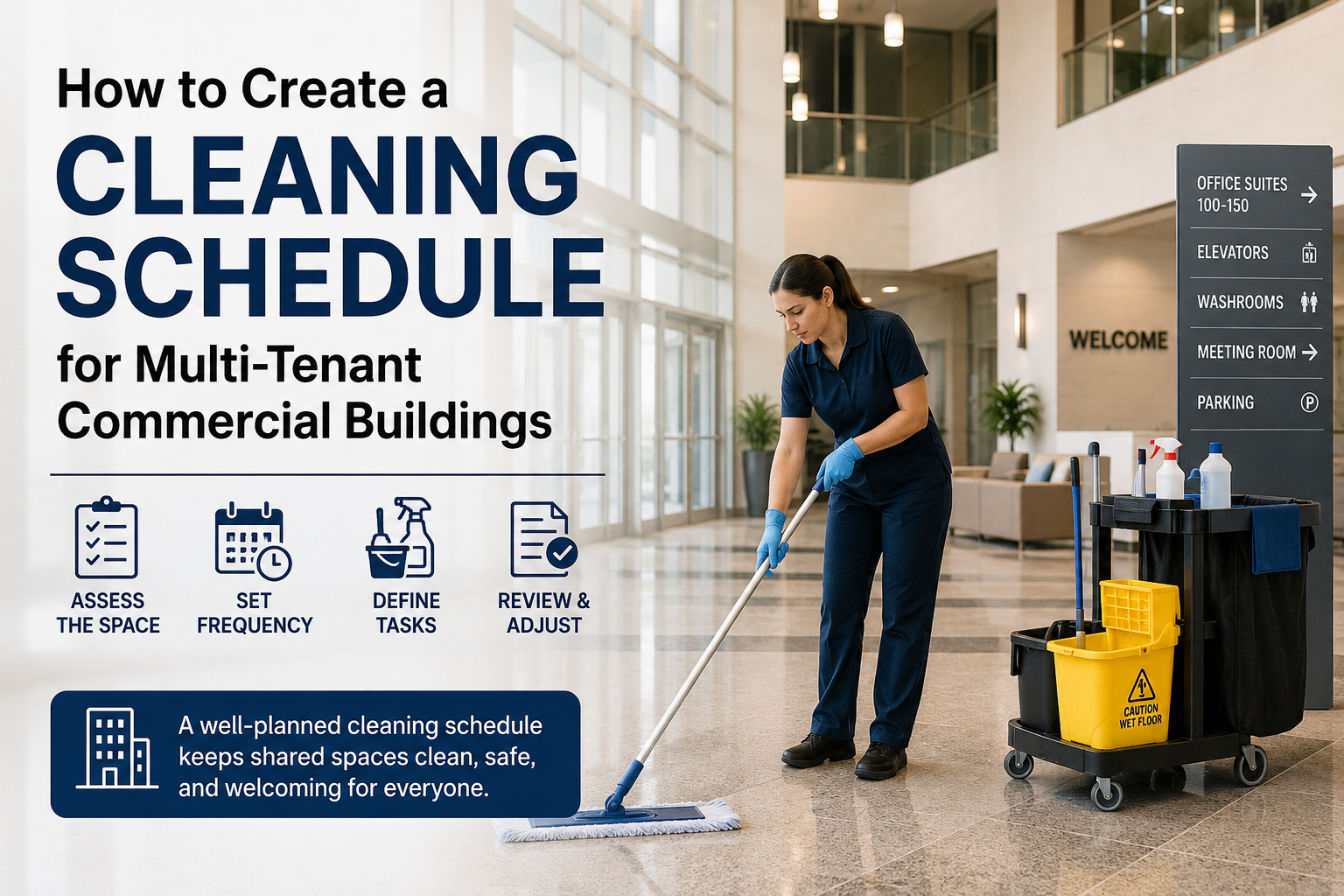
Managing a multi-tenant commercial building comes with many responsibilities, and keeping shared spaces consistently clean is one of the most visible. From lobbies and elevators to hallways, washrooms, kitchens, and meeting areas, common spaces receive traffic from employees, visitors, customers, contractors, and tenants throughout the day.
A well-planned commercial cleaning schedule helps property managers maintain consistent standards without unnecessarily disrupting building operations. Instead of treating every area the same, the schedule should consider traffic levels, the type of space, building occupancy, seasonal conditions, and the specific needs of tenants.
For property managers in Edmonton and surrounding Alberta communities, a customized janitorial plan can make it easier to keep multi-tenant buildings clean, welcoming, and professionally maintained.
Why Multi-Tenant Buildings Need a Customized Cleaning Schedule
A multi-tenant building is different from a single office. Several businesses may share the same entrances, elevators, washrooms, hallways, kitchens, and other facilities.
Cleaning requirements can also vary significantly between areas. A busy lobby may need attention every day, while a lower-traffic storage area may require less frequent cleaning.
Red Door Cleaning notes that no two commercial cleaning jobs are exactly the same and that cleaning schedules can be developed around the specific building and its requirements.
A customized schedule can help property managers:
- Maintain consistent cleanliness throughout the building
- Keep high-traffic areas under control
- Reduce the buildup of dirt and debris
- Improve the appearance of shared spaces
- Support a healthier workplace environment
- Protect floors, carpets, and other surfaces
- Minimize disruption to tenants
- Make cleaning responsibilities easier to track
Step 1: Identify Every Area That Requires Cleaning
The first step is to create a complete list of spaces within the property. Avoid focusing only on tenant offices. Shared areas often have the highest traffic and can strongly influence how visitors perceive the building.
A multi-tenant commercial building may include:
- Main entrances and foyers
- Reception and waiting areas
- Lobbies
- Hallways and corridors
- Stairways
- Elevators
- Shared washrooms
- Kitchens and lunchrooms
- Conference and meeting rooms
- Common work areas
- Mailrooms
- Storage areas
- Fitness or amenity areas
- Parking-related entrances
- Tenant office areas
Red Door Cleaning provides commercial cleaning for many of these areas, including common areas, hallways, elevators, restrooms, kitchens, conference rooms, cubicles, and private offices.
Creating this inventory prevents frequently overlooked areas from being left out of the cleaning plan.
Step 2: Divide Areas by Traffic Level
Not every area needs to be cleaned at the same frequency.
Start by categorizing spaces as high-, medium-, or low-traffic areas.
High-Traffic Areas
These typically include:
- Main entrances
- Lobbies
- Elevators
- Hallways
- Shared washrooms
- Kitchens
- Frequently used meeting areas
High-traffic spaces generally require more frequent cleaning because dirt, dust, spills, and germs can accumulate faster.
Medium-Traffic Areas
Examples may include:
- Conference rooms
- Staff areas
- Secondary corridors
- Shared offices
- Mailrooms
These areas can often be cleaned according to a regular daily or weekly schedule, depending on building usage.
Low-Traffic Areas
These might include:
- Storage rooms
- Less frequently used offices
- Back-of-house areas
- Certain utility spaces
These areas may require less frequent routine cleaning but should still be included in inspections and periodic deep-cleaning plans.
Step 3: Create Daily Cleaning Tasks
Daily cleaning should focus on areas that experience regular activity and need to remain presentable.
A typical daily commercial cleaning routine may include:
- Emptying garbage and recycling bins
- Vacuuming carpets
- Sweeping and mopping hard floors
- Cleaning and sanitizing washrooms
- Cleaning sinks and fixtures
- Disinfecting high-touch surfaces
- Cleaning entrance areas
- Spot-cleaning visible spills and marks
- Cleaning shared kitchens and lunchrooms
- Checking elevators and common areas
The exact tasks should be adjusted according to the building’s occupancy and usage.
For example, a building with hundreds of employees may require more frequent restroom and lobby maintenance than a smaller property with fewer occupants.
Step 4: Add Weekly Cleaning Tasks
Weekly tasks should address areas that do not necessarily require attention every day but still need regular maintenance.
Depending on the property, these tasks may include:
- Detailed dusting
- Cleaning doors and frames
- Cleaning less-accessible surfaces
- Detailed kitchen cleaning
- Cleaning conference rooms
- Spot cleaning carpets
- Cleaning stairways
- More detailed elevator cleaning
- Cleaning interior glass
- Inspecting areas for accumulated dirt
A weekly checklist also gives property managers an opportunity to identify areas that may need additional attention.
Step 5: Schedule Monthly and Periodic Deep Cleaning
Routine cleaning maintains day-to-day cleanliness, but some building maintenance tasks require additional time and equipment.
Monthly or periodic tasks may include:
- Deep carpet cleaning
- High dusting
- Detailed floor maintenance
- Baseboard cleaning
- Interior window cleaning
- Detailed cleaning of corners and hard-to-reach areas
- Furniture and upholstery cleaning
- Floor stripping and waxing when required
Red Door Cleaning provides specialized services such as commercial carpet cleaning and floor stripping and waxing, which can be incorporated into a broader building maintenance plan.
Periodic deep cleaning is particularly important in larger commercial properties because regular surface cleaning alone may not address accumulated dirt in carpets, flooring, corners, and other less-accessible areas.
Step 6: Consider Tenant Schedules
A cleaning schedule should work around the businesses operating inside the building.
Cleaning during peak business hours may create unnecessary interruptions, particularly in reception areas, conference rooms, hallways, and shared workspaces.
Property managers should consider:
- Tenant operating hours
- Building access requirements
- Busy periods
- Meeting schedules
- Security procedures
- Evening and weekend access
- Special events
- Deliveries and maintenance work
Many commercial cleaning companies can provide services outside regular business hours. Red Door Cleaning, for example, offers flexible cleaning schedules designed around the needs of individual businesses and properties.
Step 7: Account for Edmonton’s Seasonal Conditions
Edmonton’s changing weather can significantly affect commercial building cleanliness.
During winter, snow, ice, salt, and sand can be tracked through entrances and onto floors. Entryways and high-traffic corridors may therefore require additional attention.
A seasonal cleaning plan can include:
Winter:
- More frequent entrance cleaning
- Salt and sand removal
- Increased floor mopping
- Carpet maintenance
- Monitoring wet floors
Spring:
- Deep cleaning after winter
- Carpet cleaning
- Detailed dust removal
- Window cleaning
- Floor maintenance
Summer:
- Routine dust and dirt removal
- Window and glass cleaning
- Floor and carpet maintenance
- Periodic deep cleaning
Fall:
- Preparing entrances for wet weather
- Increased floor maintenance
- Cleaning exterior-entry areas
- Preparing for winter conditions
Seasonal adjustments allow the cleaning schedule to respond to actual building conditions instead of relying on a fixed routine throughout the year.
Step 8: Build a Cleaning Checklist
A written checklist makes the cleaning program easier to manage.
A simple checklist can include:
| Area | Daily | Weekly | Monthly/Periodic |
|---|---|---|---|
| Lobby | ✓ | Detailed cleaning | Deep cleaning |
| Elevators | ✓ | Detailed cleaning | Periodic maintenance |
| Washrooms | ✓ | Detailed cleaning | Deep cleaning |
| Hallways | ✓ | Detailed cleaning | Floor maintenance |
| Kitchens | ✓ | Deep cleaning | Detailed maintenance |
| Carpets | Vacuum | Spot cleaning | Deep cleaning |
| Windows | Spot clean | As needed | Detailed cleaning |
| High-touch surfaces | ✓ | Inspection | Deep cleaning |
The schedule should be treated as a starting point rather than a universal formula. Building size, occupancy, flooring, tenant activity, and the number of washrooms can all influence how frequently different tasks should be completed.
Step 9: Inspect and Adjust the Schedule
A cleaning schedule should not be considered finished once it is created.
Property managers should periodically inspect the building and ask:
- Are high-traffic areas staying clean throughout the day?
- Are tenants satisfied with common-area cleanliness?
- Are washrooms being cleaned frequently enough?
- Are carpets showing excessive wear or staining?
- Are entrances becoming dirty faster than expected?
- Are there areas cleaners are consistently missing?
- Does the schedule interfere with tenant operations?
- Are seasonal conditions creating additional cleaning requirements?
If an area repeatedly becomes dirty before its scheduled cleaning time, the solution may be to increase cleaning frequency rather than simply adding more tasks to the existing visit.
How Often Should a Multi-Tenant Commercial Building Be Cleaned?
There is no single cleaning frequency that works for every multi-tenant building.
A smaller, low-traffic property may require cleaning several times per week, while a busy commercial building may benefit from daily janitorial service.
Factors that influence cleaning frequency include:
- Number of tenants
- Number of employees and visitors
- Building size
- Number of washrooms
- Type of businesses operating inside
- Amount of foot traffic
- Flooring materials
- Shared amenities
- Operating hours
- Seasonal conditions
- Required level of cleanliness
Red Door Cleaning similarly evaluates factors such as building size, number of people, bathrooms, flooring, and required service frequency when determining cleaning needs and pricing.
Benefits of a Well-Planned Commercial Cleaning Schedule
A structured cleaning schedule provides more than a cleaner-looking building.
Consistent Building Appearance
Tenants and visitors are more likely to notice when common areas are consistently clean and maintained.
Better Use of Cleaning Resources
A schedule helps cleaning teams prioritize areas according to actual usage instead of spending equal time everywhere.
Reduced Disruption
Cleaning can be scheduled around tenant operating hours and periods of lower building activity.
Easier Property Management
A documented checklist makes it easier to track completed tasks and identify areas requiring additional attention.
Better Long-Term Maintenance
Regular cleaning can help protect carpets, floors, fixtures, and other building surfaces from excessive dirt and wear.
A More Welcoming Environment
Clean entrances, washrooms, hallways, and shared areas create a more professional environment for tenants, employees, customers, and visitors.
When Should You Consider Professional Janitorial Services?
Managing cleaning internally can become difficult as the number of tenants, floors, and shared facilities increases.
Professional janitorial services can help property managers establish a cleaning routine based on the actual requirements of the building. Instead of using the same checklist for every property, a professional cleaning provider can assess the facility and develop a schedule around its traffic patterns and operational needs.
Red Door Cleaning provides customized commercial and janitorial cleaning services for offices, medical facilities, retail locations, apartments and condominiums, fitness facilities, and other commercial properties throughout Edmonton and surrounding Alberta communities.
Create a Cleaning Plan That Works for Your Building
The best cleaning schedule for a multi-tenant commercial building is one that reflects how the building is actually used.
Start by identifying every area, classify spaces according to traffic, establish daily and periodic tasks, consider tenant schedules, and adjust the plan based on seasonal conditions. Most importantly, regularly inspect the property and update the schedule when building needs change.
For property managers, a customized cleaning plan can make maintaining a professional and welcoming commercial property much easier.
If you need help developing a commercial cleaning schedule in Edmonton or surrounding areas, Red Door Cleaning can assess your building and create a cleaning program designed around your property’s specific requirements.
Frequently Asked Questions
How often should a multi-tenant commercial building be cleaned?
The ideal frequency depends on building size, occupancy, foot traffic, number of washrooms, flooring, tenant activity, and operating hours. High-traffic buildings generally require more frequent cleaning than smaller, low-traffic properties.
What areas should be cleaned daily in a commercial building?
Daily cleaning commonly includes entrances, lobbies, elevators, washrooms, hallways, kitchens, high-touch surfaces, floors, and garbage collection. The exact routine should be adjusted according to building usage.
Should commercial cleaning be done after business hours?
After-hours cleaning can reduce disruption to tenants and visitors. However, the best cleaning time depends on building access, security, tenant schedules, and operational requirements.
What is the difference between routine cleaning and deep cleaning?
Routine cleaning focuses on maintaining day-to-day cleanliness, such as vacuuming, mopping, sanitizing washrooms, and removing garbage. Deep cleaning addresses areas that need more detailed or less frequent maintenance, such as carpets, baseboards, high surfaces, and certain flooring.
Can a cleaning schedule be customized for a multi-tenant building?
Yes. A commercial cleaning schedule should ideally be customized according to the building’s size, occupancy, traffic patterns, tenant requirements, flooring, common areas, and operating hours.
How can property managers keep cleaning consistent?
A written checklist, defined cleaning frequencies, regular inspections, and communication between property managers and cleaning staff can help maintain consistent standards. Professional janitorial services can also provide an established cleaning routine tailored to the property.